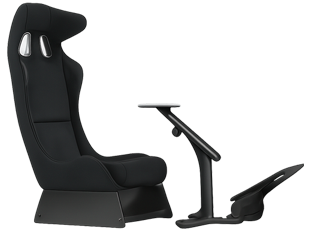
Discover the best Sim racing rigs for every budget and skill level, from beginner cockpits to pro-grade racing simulators. Learn how to choose the right frame, seat, wheel, pedals and accessories so you can build a realistic, comfortable and future-proof Sim racing setup.
What Are the Best Sim Racing Rigs Right Now? (Quick Overview)
When people search for best Sim racing rigs, their main intent is simple:
“Tell me what to buy, and why.”
To answer that quickly, it helps to think in four main categories of Sim racing rigs based on budget, space, and ambition:
| Tier | Typical User | Key Traits | Best Use Case |
|---|---|---|---|
| Entry-Level | New Sim racers, casual console players | Affordable, easier to assemble, some flex | First cockpit, occasional racing |
| Mid-Range | Serious enthusiasts, league racers | Stronger frame, better seat, upgradeable | Regular online racing, endurance sessions |
| High-End | eSports drivers, streamers, professionals | Extremely rigid, 80/20 profiles, motion-ready | Competitive Sim racing, content creation |
| Compact/Foldable | Apartment users, limited space | Smaller footprint, portable, can be stored | Living rooms, shared spaces |
Each group includes multiple brands and models, but the logic is always the same:
-
Entry-level rigs get you into the game at low cost.
-
Mid-range cockpits offer the best balance of price and performance.
-
High-end rigs are engineered for absolute stability and realism.
-
Compact rigs solve the “no dedicated room” problem without giving up a wheel and pedal set.
From here on, we won’t focus on one single brand, but on the principles that define the best racing simulator setup in each range, so you can make smart decisions even when new models hit the market.
The Rigs I Recommend (After Actually Using Them)
1. Best Entry-Level — Playseat Trophy / Playseat Challenge
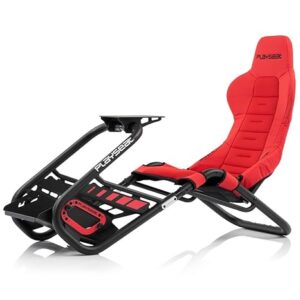
Playseat Trophy Sim Racing Cockpit
Playseat Trophy Sim Racing Cockpit | High Performance Racing Simulator Cockpit | Supports Direct Drive | Compatible with All Steering Wheels & Pedals on The Market | Supports PC & Console | Red.
When I lived in a smaller room, this was exactly what I needed. It folds up fast, feels light to move, stays comfortable for long sessions, and is stable enough for belt-driven wheels or basic load-cell pedals.
Neighbor’s reaction: “My wife loves how quickly it folds away. No arguments.”
My verdict: An ideal starter rig—but once you upgrade to stronger gear, you’ll outgrow it.
Best Mid-Range — GT Omega & Next Level Racing GTtrack
2.Next Level Racing GTTrack Simulator Cockpit
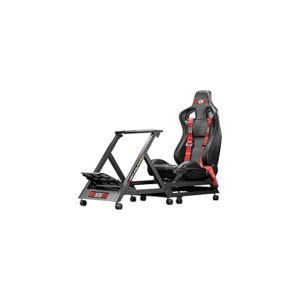
Next Level Racing GTTrack Simulator Cockpit
Built for professionals and serious sim racers, this rig offers adjustable wheel, pedal, and shifter positions, comes pre-drilled for major brands like Thrustmaster, Logitech, and Fanatec, and delivers the rigidity needed for direct drive wheels and pro-grade pedal sets.
3. Next Level Racing GTTrack Simulator Cockpit
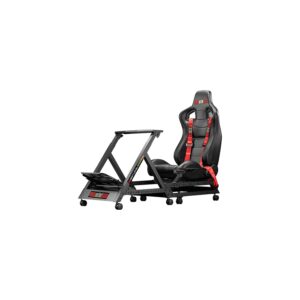
Next Level Racing GTTrack Simulator Cockpit
The Next Level Racing GTTrack Simulator Cockpit is a premier choice for sim racers who want a professional‑grade experience at home. Built solid and stable, this cockpit supports heavy wheels, pedals, and direct‑drive setups without flex or wobble. The seat feels comfortable even in long sessions, and it’s highly adjustable — accommodating users of many sizes and play styles. Setting it up is straightforward thanks to clear instructions, though it can be a bit heavy to move once assembled. Whether you’re competing in iRacing, Assetto Corsa, or Forza, the GTTrack delivers race car‑like immersion and performance without needing a real chassis. It’s an investment in quality that serious sim racers will appreciate.
At a Glance: Professional build, stable, customizable.
Key Features
- Heavy‑duty steel construction
- Telescopic and fully adjustable wheel deck
- Adjustable pedal plate
- Compatible with motion platforms
Pros & Cons
| Pros | Cons |
|---|---|
| Extremely stable | Heavy structure |
| Highly adjustable | Premium price |
| Supports strong force feedback | Requires space |
Specs
| Spec | Details |
|---|---|
| Material | Steel |
| Weight | ~85 lbs |
| Compatibility | Most wheels/pedals |
| Adjustability | Full |
4. Next Level Racing F‑GT Lite Formula
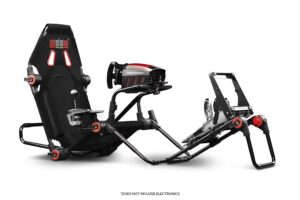
Next Level Racing F-GT Lite Formula
The Next Level Racing F‑GT Lite Formula cockpit is an entry‑friendly choice that doesn’t skimp on performance. Designed to handle both Formula and GT style racing positions, it’s a great bridge for racers who love variety. The aluminum frame is lighter than steel but still stiff, and the multi‑position wheel and pedal plates make transitioning between car types fun and easy. Assembly is quick and user‑friendly. While it doesn’t feel as rock‑solid as heavy steel rigs in high torque use, its adaptability and value are hard to beat. For someone dipping their toes into competitive sim racing without breaking the bank, the F‑GT Lite is a smart setup that grows with your skills.
At a Glance: Versatile, lightweight, good value.
Key Features
- Convertible between Formula & GT
- Lightweight aluminum frame
- Adjustable wheel & pedal positions
- Compatible with accessories
Pros & Cons
| Pros | Cons |
|---|---|
| Flexible design | Not as stiff as steel |
| Easy assembly | Lower weight may flex |
| Great price | Limited expansions |
Specs
| Spec | Details |
|---|---|
| Material | Aluminum |
| Weight | ~50 lbs |
| Compatibility | Most wheels/pedals |
| Adjustability | Full multi‑position |
5. Playseat Challenge Sim Racing Cockpit
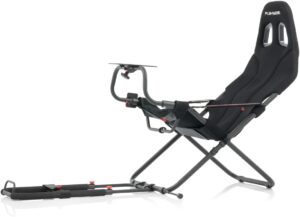
Playseat Challenge Sim Racing Cockpit | Foldable & Adjustable | for High Performance Sim Racing
The Playseat Challenge is ideal for racers with limited space who still want a genuine racing feel. Its foldable design makes it easy to store in a closet or against a wall after use. Setup is quick and intuitive — unfold, secure your wheel and pedals, and you’re ready to race. While the seat is lighter and less adjustable than larger cockpits, it’s comfortable and works well for casual and mid‑level sim racers. The simple frame won’t support very heavy force‑feedback systems as well, but it’s great for beginner to intermediate players. If your space is tight but your love for virtual racing is big, the Playseat Challenge delivers fun performance in a compact package.
At a Glance: Space‑saving, comfortable, simple.
Key Features
- Foldable for storage
- Comfortable racing seat
- Quick setup
- Wheel & pedal compatibility
Pros & Cons
| Pros | Cons |
|---|---|
| Easy to store | Not ultra‑rigid |
| Great for small spaces | Limited adjustability |
| Works with many wheels | Not ideal for heavy setups |
Specs
| Spec | Details |
|---|---|
| Material | Steel |
| Weight | ~30–35 lbs |
| Foldable | Yes |
| Compatibility | Most wheels/pedals |
6. Next Level Racing Motion Platform V3
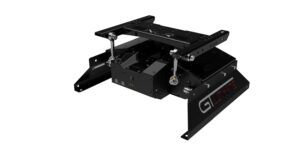
Next Level Racing Motion Platform v3
The Next Level Racing Motion Platform V3 is a game‑changer for sim racers craving immersion. This motion platform adds dynamic movement to your cockpit — tilting and translating based on in‑game action for realistic feedback up to 25 kg of load. It’s a bit of an investment, but the sense of motion elevates any racing sim, especially with titles supporting motion integration. Assembly takes patience, and tuning motion settings can be a learning curve, but the result is compelling. Pair it with a sturdy cockpit like the GTTrack for the best experience. For racers who want to feel acceleration, braking, and cornering in their body as well as on screen, this motion platform is a thrilling upgrade.
At a Glance: Immersive, powerful, advanced.
Key Features
- Dynamic translational and tilt motion
- Supports heavy setups
- Works with many games
- Adjustable motion profiles
Pros & Cons
| Pros | Cons |
|---|---|
| Immersive experience | Higher price |
| Strong load support | Complex setup |
| Works with many cockpits | Requires tuning |
Specs
| Spec | Details |
|---|---|
| Motion Type | Tilt + Translate |
| Load Capacity | ~25 kg |
| Compatibility | Many simulators |
| Power | Motor driven |
7. Next Level Racing ERS4 Elite Reclining Seat
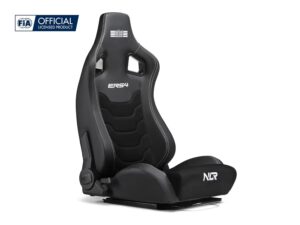
Next Level Racing ERS4 Elite Reclining Seat – PU Leather & Suede Edition
The Next Level Racing ERS4 Elite Reclining Seat focuses on comfort and realism. It’s a reclining racing‑style seat designed to bring real car ergonomics to your sim setup. With high‑quality padding and side bolsters, long sim sessions feel comfortable rather than tiring. The frame supports a range of wheel and pedal positions, and build quality feels solid. Compared to typical cockpit seats, the recline adjustment lets you fine‑tune your posture for endurance sessions. While you’ll need to pair it with a separate wheel stand or cockpit, the seat itself is a worthwhile upgrade. For sim racers who value comfort as much as performance, the ERS4 is a premium seating choice.
At a Glance: Comfortable, ergonomic, premium seat.
Key Features
- Reclining function
- High‑comfort padding
- Adjustable mounting points
- Durable frame
Pros & Cons
| Pros | Cons |
|---|---|
| Very comfortable | Needs separate cockpit |
| Adjustable recline | Adds cost |
| Good build quality | Bulky |
Specs
| Spec | Details |
|---|---|
| Material | Fabric & steel |
| Reclining | Yes |
| Compatibility | Standard mounts |
| Weight | ~40 lbs |
8. Trak Racer – TR160 Mk4 Racing Simulator TR One
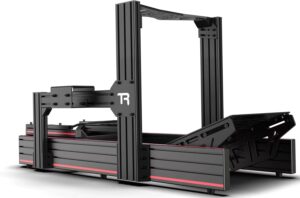
Trak Racer – TR160 Mk4 Racing Simulator TR One – Fanatec DD/Aluminium Profile
The Trak Racer TR160 Mk4 Racing Simulator TR One delivers a high‑end experience aimed at serious sim racers. Its robust steel frame and heavy base plate reduce flex, even with aggressive force feedback wheels and pedals. With a sleek, functional design, it feels like a proper race seat rather than a gaming accessory. Adjustments for seat, wheel, and pedals are smooth and precise, accommodating a wide range of body sizes. Assembly is straightforward though the parts are heavy. Its premium build justifies the price for racers who compete or train often. If you want a cockpit that feels like a race car chassis and performs accordingly, the TR160 Mk4 is a standout choice.
At a Glance: Tough, professional‑grade, precise.
Key Features
- Heavy‑duty steel frame
- Multiple adjustment points
- Wide compatibility
- Solid pedal plate
Pros & Cons
| Pros | Cons |
|---|---|
| Extremely stable | Premium price |
| Precise fit | Large footprint |
| Heavy‑duty design | Assembly takes space |
Specs
| Spec | Details |
|---|---|
| Material | Steel |
| Weight | ~90 lbs |
| Compatibility | Most motors |
| Adjustability | Full |
9. GT Omega ART Racing Simulator Cockpit RS6
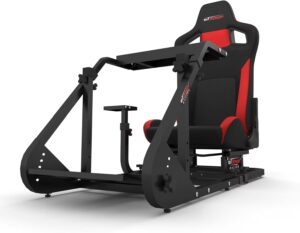
GT Omega ART Racing Simulator Cockpit RS6 Gaming Console Seat
The GT Omega ART RS6 cockpit balances performance with comfort and style. Its strong steel frame resists flex during intense racing, and the seating position puts you in a natural driving posture. GT Omega is known for thoughtful ergonomics, and the RS6 doesn’t disappoint — controls are easy to reach and adjust. Assembly is relatively user‑friendly with labeled parts and clear instructions. The cockpit works great with a range of wheels and pedals, and optional accessories like harness plates or motion mounts add expandability. For sim racers who want a reliable setup without going fully pro‑tier, the RS6 is a solid all‑around choice that feels great for long sessions and competitive play.
At a Glance: Balanced, ergonomic, expandable.
Key Features
- Steel frame
- Adjustable wheel & pedal plates
- Ergonomic seating
- Accessory ready
Pros & Cons
| Pros | Cons |
|---|---|
| Comfortable | Some accessories extra |
| Sturdy | Large footprint |
| Easy adjustments | Heavy |
Specs
| Spec | Details |
|---|---|
| Material | Steel |
| Weight | ~80 lbs |
| Compatibility | Most wheels/pedals |
| Adjustability | Full |
10. GT Omega ART Racing Simulator Cockpit RS9
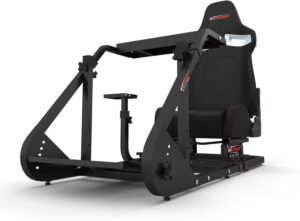
GT OMEGA Art Racing Simulator Cockpit RS9 Gaming Console Seat
The GT Omega ART RS9 represents a premium evolution of the RS series, with refined adjustability and a more rigid frame for serious sim racers. It’s built to handle even the strongest force‑feedback wheels and advanced pedal sets without flexing, and its seat design feels supportive for longer races. The cockpit’s modular nature lets you add screens, shifters, and handbrakes with ease. While it sits at a higher price point than entry‑level rigs, the RS9’s quality and future upgrade potential make it attractive for racers planning to grow their setup. If you want a cockpit that feels like a competition rig right out of the box, the RS9 delivers both form and function.
At a Glance: Premium, rigid, upgrade‑ready.
Key Features
- Reinforced steel construction
- Full adjustability
- Accessory mounts
- Upgradable
Pros & Cons
| Pros | Cons |
|---|---|
| Very rigid | Higher cost |
| Great ergonomics | Large size |
| Accessory‑ready | Assembly time |
Specs
| Spec | Details |
|---|---|
| Material | Reinforced steel |
| Weight | ~90+ lbs |
| Compatibility | All major wheels |
| Adjustability | Full |
Top Entry-Level Sim Racing Rigs for Beginners
If you are building your first Sim racing cockpit, your top priorities are usually:
-
Keep the price reasonable
-
Avoid complicated tools or advanced DIY
-
Ensure compatibility with console or PC
-
Reduce the amount of space the rig occupies
Typical features of a beginner Sim racing rig include:
-
Steel tubing or a lighter metal frame
-
Basic seat or even support for using your existing office chair
-
Simple mounting points for a wheel and pedal set
-
Some flex under heavy braking, but acceptable for casual use
An entry-level cockpit is perfect if:
-
You are moving from a desk-mounted wheel to something more stable
-
You mainly run on PlayStation or Xbox and want a plug-and-play racing simulator setup
-
You’re not ready to commit to a full-time dedicated Sim racing room
Benefits for beginners:
-
Low risk: If you decide Sim racing is not for you, you haven’t broken the bank.
-
Faster start: Many entry rigs are quick to assemble and easy to adjust.
-
Upgrade path: You can later upgrade the Sim racing rig or move the same wheel/pedals to a stronger cockpit.
Best Mid-Range Sim Racing Rigs for Serious Enthusiasts
At some point, most racers outgrow their first cockpit. They want:
-
Less flex when using load cell pedals
-
A seat that feels closer to a real bucket seat
-
Better adjustability and ergonomics
-
Stronger mounting for force-feedback wheels or even direct drive (DD) wheelbases
This is where mid-range Sim racing rigs shine. They often feature:
-
Rigid steel or hybrid frames
-
Integrated racing-style seats with sliders
-
More mounting options for shifters, handbrakes and monitors
-
Better ergonomics for long endurance races and league events
The mid-range territory is where many racers find the true sweet spot between investment and performance. A good mid-range Sim racing cockpit allows:
-
Smooth transition from entry wheels to stronger DD bases
-
Stable braking with stronger pedal sets
-
Modular expansions: extra mounts, keyboard trays, monitor stands
For someone who races several evenings per week, joins online championships, or wants to take Sim racing seriously without going all-in on professional gear, a mid-range rig is often the best Sim racing rig choice.
High-End Sim Racing Rigs for Professional Sim Racers
If you watch Sim racing eSports events or follow famous Sim racers on streaming platforms, you’ll notice many of them using high-end Sim racing rigs built from:
-
80/20 aluminum profiles (industrial-style extrusions)
-
Thick mounting plates for direct drive wheelbases
-
Heavy-duty pedal plates designed for extreme brake forces
-
Dedicated arms for shifters, handbrakes, button boxes, dashboards
This level of racing simulator setup is designed for:
-
Absolute stability under massive forces
-
Perfect alignment between wheel, seat, and pedals
-
Full compatibility with advanced add-ons like motion platforms, triple-monitor stands, or custom dashboards
High-end rigs live in the world of precision and repeatability. The more consistent and rigid your cockpit, the easier it is to:
-
Maintain the same driving position every time
-
Trust your muscle memory under braking
-
Focus on strategy, racecraft, and telemetry rather than fighting the hardware
Of course, this comes with a higher price tag, greater weight, and more assembly time. That’s why these rigs are best for:
-
Professional or semi-pro Sim racers
-
Content creators and streamers who race live
-
Drivers who treat Sim racing as training for real-world motorsport
How to Choose the Best Sim Racing Rig for Your Needs
Knowing the categories is one thing. Actually choosing the best Sim racing rig for your reality is another. This is where we apply a bit of CANABIS logic:
-
Clear: Define your constraints and objectives.
-
Attractive: Pick a rig you’ll enjoy seeing and using every week.
-
Narrative: Fit the rig into your personal racing story—beginner, enthusiast, or pro.
-
Authority: Rely on proven design principles, not just marketing.
-
Benefits: Focus on comfort, performance and long-term value.
-
Insights: Understand what truly matters vs what is hype.
-
Story: Build a cockpit that can grow with your evolving Sim racing journey.
Let’s break that down into concrete decisions.
Conclusion
Choosing the best Sim racing rigs is less about chasing one “perfect” model and more about aligning your budget, space, platform and ambitions with a cockpit that can grow with you. From budget Sim racing rigs under $300 to high-end Sim racing rigs built around aluminum profiles and motion systems, the core principles remain the same:
-
Prioritize stability, safety and ergonomics
-
Think long-term and plan an upgrade path
-
Match your rig to your lifestyle and environment—console or PC, apartment or dedicated room
-
Upgrade with purpose, not just hype

My name is David Miller, and I’m a sim racing enthusiast with a passion for realistic driving and smart, affordable setups. I started sim racing years ago with basic gear and a single monitor, and slowly upgraded to better wheels, pedals, and rigs as I learned more about car control, racecraft, and setup tuning.