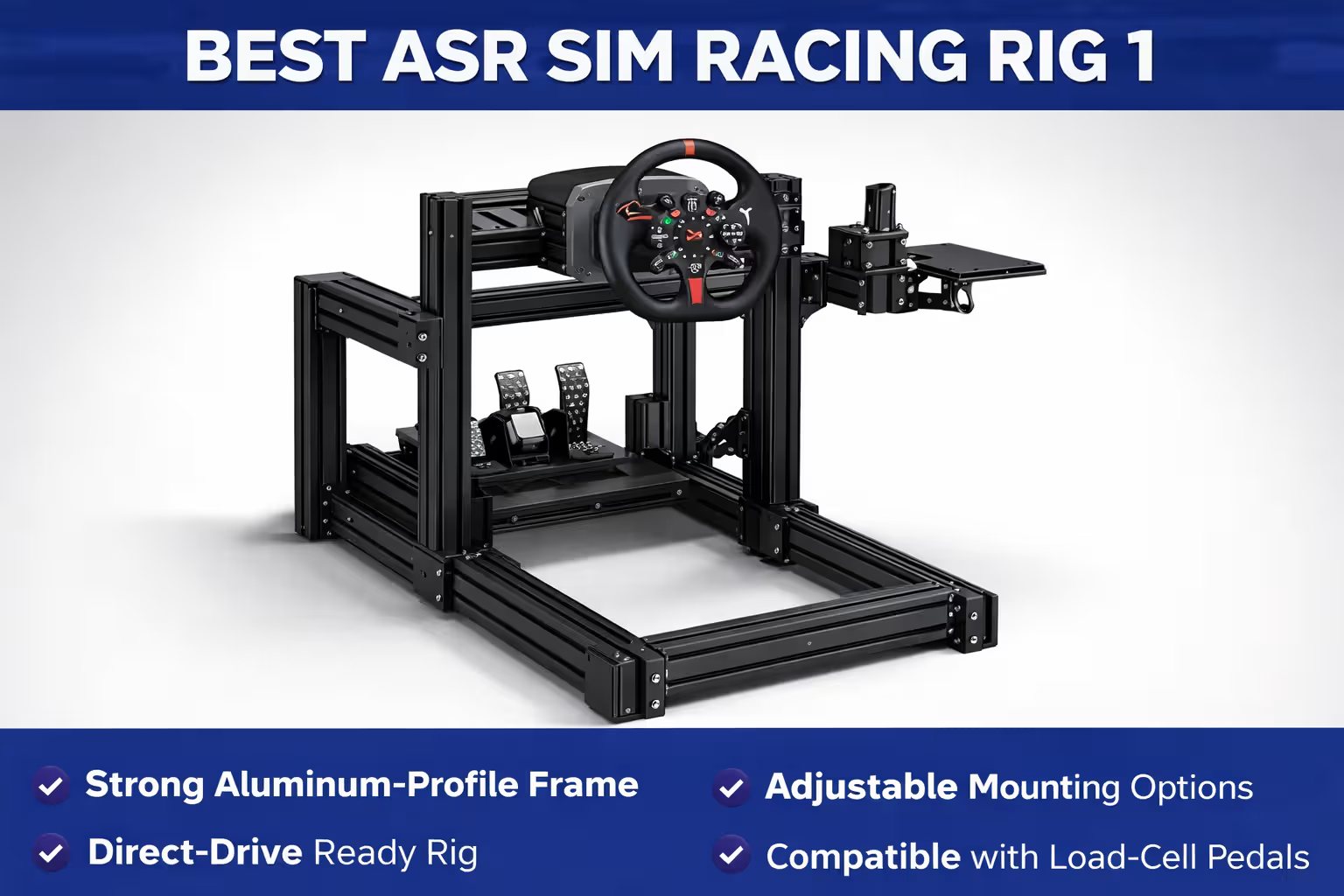
If you’re searching for the best ASR sim racing rig, you’re already looking at one of the most “no-nonsense” cockpit ecosystems in sim racing: aluminum-profile frames, strong mounting options, and a clear upgrade path from entry level to high-end direct-drive builds.
The key is not “which rig is best overall,” but which ASR rig is best for your hardware, space, and driving style. In this guide, you’ll get a practical Top 5 and a buying checklist you can use before spending money.
Top 5 Best ASR Sim Racing Rig 1
1) Best Overall: ASR 3 (Generation 2)
Why it wins: The ASR 3 hits the best balance of stiffness, adjustability, and long-term value for most sim racers. It’s a mid-range chassis with a heavier-duty base profile and a footprint that stays manageable in real rooms.
Quick specs (high level):
- Base profile: 3″ x 1.5″
- Base size: 50″ length x 22″ width
- Height: 28″ (feet to top of steering column)
- Assembled weight: 71 lbs
Best for
- Belt-driven to direct-drive users who want “buy once, keep for years.”
- People planning upgrades (pedals, shifter/handbrake, tactile, monitors).
Potential trade-off
-
Costs more than ASR 1, but usually saves money long-term by avoiding an early replacement.
2) Runner-Up for Best Overall: ASR 6 (Legacy Edition)
Why it’s here: If you want near-limitless mounting flexibility and a more flagship feel, ASR 6 is positioned as a “return of a legend,” using open-face aluminum profile for customization and a 6″ aluminum base for rigidity.
Best for
- Drivers who keep adding gear (button boxes, motion/haptics, extra brackets, etc.).
- Builders who want maximum flexibility in how they mount and route components.
Potential trade-off
-
Overkill for entry-level wheels/pedals; it shines when your hardware is demanding.
3) Best for Single Seaters: ASR F-Aero (Generation 2)
(This aligns with “single servings” in your outline—interpreted as single-seater / Formula-style.)
Why it wins: The F-Aero is purpose-built for the Formula driving posture without the footprint/complexity of pro-only formula builds, aiming for simplicity and smart ergonomics.
Best for
- Formula/open-wheel fans who want the inclined seating + elevated pedal feel.
- Space-conscious setups that still need a solid frame.
Notable capability
-
Designed to handle high-torque wheelbases (up to 18Nm noted by ASR).
4) Best Safety Features: ASR 4 (Flat Face)
Why “safety” matters here: In sim rigs, “safety” is mostly about stability under load: no flex, no rocking, no unexpected movement when you’re braking hard or running higher torque. The ASR 4 steps up with a bigger base profile and a much heavier chassis.
Quick specs (high level):
- Base profile: 4.5″ x 1.5″
- Base size: 50″ length x 22″ width
- Height: 29″
- Assembled weight: 116 lbs
Best for
- High-torque DD wheelbases + stiff load-cell/hydraulic pedals.
- Drivers who want “set it once, it never moves.”
Potential trade-off
-
Heavier, less “portable,” and takes more commitment on space.
5) Best “No-Compromise” Stability: ASR Pro (Generation 2)
Why it wins: The ASR Pro is designed to stay rigid even with the most powerful direct-drive wheelbases and hydraulic pedals, using a reinforced 6″ aluminum base and emphasizing fast, user-friendly adjustability.
Best for
- Serious DD + hydraulic pedal users who want zero-flex confidence.
- People who constantly refine their ergonomics (wheel deck/pedal changes).
Bonus practicality
-
ASR Pro profiles include integrated cable management channels for a cleaner professional build.
Buying Guide
Compatibility
- Wheelbase mounting: Confirm your wheelbase can be mounted via the deck/side/front mount options you plan to use (especially for DD ecosystems).
- Pedals: Heavier pedals (stiff load cells / hydraulic) benefit from higher rigidity frames (ASR 4 / ASR Pro).
Build Quality
-
Look at profile size and total mass as fast indicators of stiffness:
- ASR 1 uses 1.5″ x 1.5″ base profile.
- ASR 3 uses 3″ x 1.5″ base profile.
- ASR 4 uses 4.5″ x 1.5″ base profile and weighs 116 lbs assembled.
- ASR Pro emphasizes a reinforced 6″ base for high-end loads.
Adjustability
-
If you’re still finding your “perfect” driving position, prioritize:
- Easy pedal angle/height changes
- Wheel deck adjustments
- Room for shifter/handbrake placements
ASR Pro explicitly emphasizes quick adjustments for pedals/heel rest/wheel deck.
Space Requirements
- Many ASR bases share a similar footprint (e.g., 50″ x 22″ appears on ASR 1/3/4 specs).
Your real constraint is usually: - Seat choice + recline
- Monitor stand placement (integrated vs freestanding)
- Entry/exit clearance (especially Formula posture)
Features
Decide what matters most:
- Formula posture → F-Aero
- Maximum rigidity → ASR 4 / ASR Pro
- Modular customization (open-face profile) → ASR 6 Legacy
Budget
A practical way to budget:
- Rig + seat (must-have)
- Pedals upgrade (biggest performance jump for most drivers)
- Wheelbase upgrade (DD later if you want)
If you’re entry-level today but plan DD later, ASR 3 is commonly the “safe middle” choice.
Customer Reviews and Warranty
- Cross-check real user builds (what wheelbase, what pedals, what monitor setup).
- Warranty matters more on frames you plan to keep long-term; ASR 6 product page references a lifetime warranty for chassis/stands.
Final Recommendation
If you want one pick that works for most people, the ASR 3 is the most balanced “buy once, grow into it” option, with clearly listed mid-range specs and a sturdy 3″ base profile.
If your priority is single-seater realism, go ASR F-Aero for Formula posture and a compact, purpose-built layout.
If you’re building around high torque + maximum stability, choose ASR 4 (heavy, rigid) or go straight to ASR Pro if you want the flagship-level approach for powerful DD and hydraulic pedals.

My name is David Miller, and I’m a sim racing enthusiast with a passion for realistic driving and smart, affordable setups. I started sim racing years ago with basic gear and a single monitor, and slowly upgraded to better wheels, pedals, and rigs as I learned more about car control, racecraft, and setup tuning.