
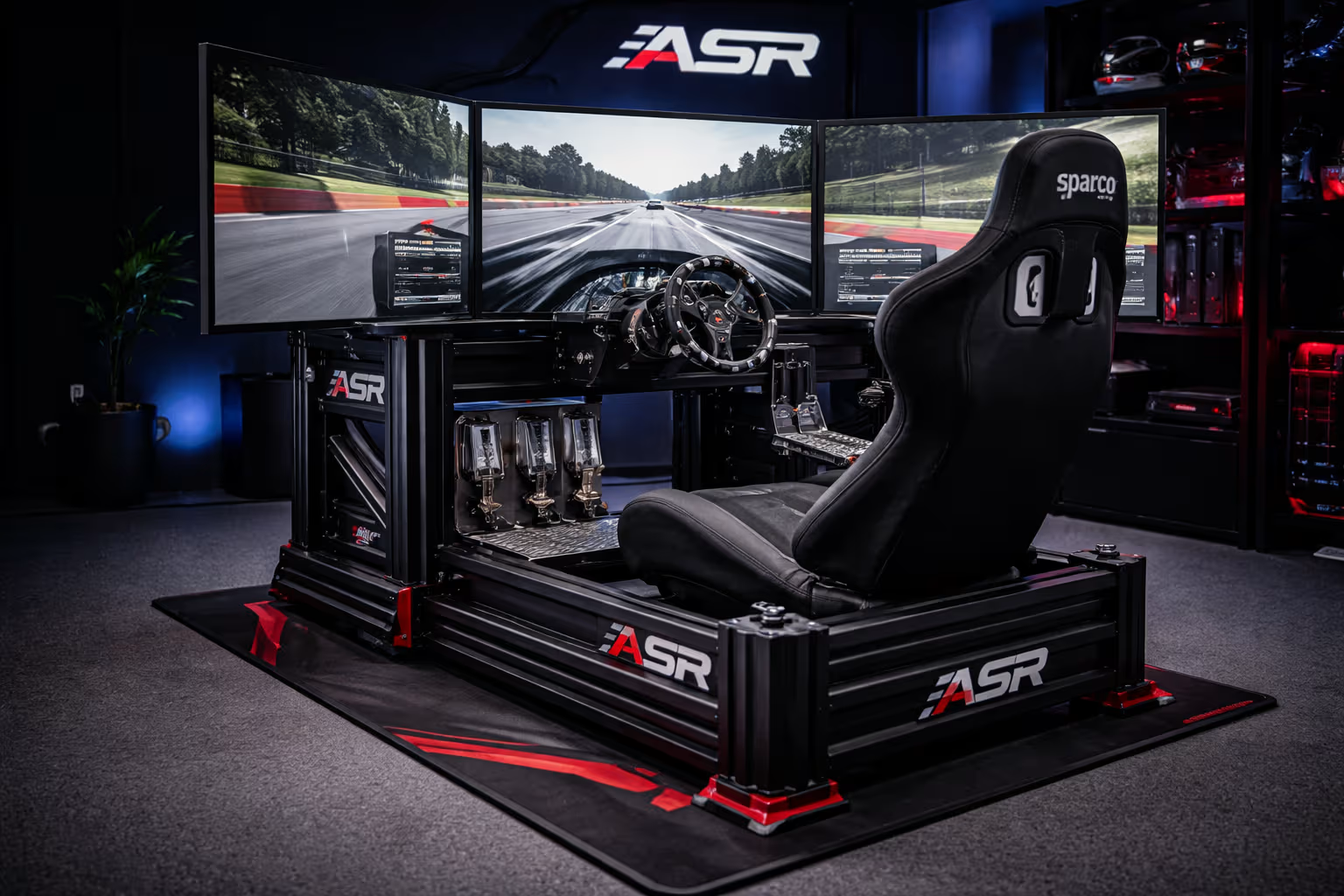
Looking for the Best ASR Sim Racing Chassis for your setup? This guide breaks down Advanced SimRacing’s most popular frames and explains which ASR chassis fits your wheelbase, pedals, and space. You’ll learn what really matters for stability with direct drive wheels, how to choose the right cockpit size, and which mounting options improve ergonomics for long sessions.
We compare key differences across ASR models, highlight compatibility with major brands, and share practical tips for assembly, cable management, and future upgrades like shifters, handbrakes, monitors, and motion platforms. If you want a rigid, modular aluminum profile rig that can grow with your sim racing goals, this article gives you a clear decision path—so you buy once, set it up right, and drive with confidence.
Top Best ASR Sim Racing Chassis
1. Extreme Simracing FORMULA FX1 COCKPIT
Extreme Simracing FORMULA FX1 COCKPIT Sim Racing Chassis PLATFORM
The FX1 is a dedicated “Formula-style” cockpit designed to replicate the unique, reclined seating position of an F1 car. Unlike hybrid rigs that try to do everything, this chassis commits 100% to the open-wheel experience, making it a favorite for drivers who exclusively race cars like the F1-75, Dallara iR-01, or Formula Vee.
Best For: Serious sim racers strictly focused on Formula/Open-Wheel racing who prioritize immersion and aesthetics over universal adaptability.
Key Features
- Authentic F1 Geometry: Features a highly reclined seat and raised pedal plate to mimic the “feet-level-with-heart” driving position found in real Formula 1 and IndyCars.
- Tubular Carbon Steel Frame: Constructed from reinforced carbon steel tubing (non-aluminum profile) designed to handle high-torque Direct Drive wheels.
- Integrated Mobility: Uniquely equipped with front caster wheels, allowing you to lift the rear and “wheelbarrow” the rig around the room easily—a rare feature in heavy static rigs.
- Custom “FX1” Seat: Includes a specialized bucket seat designed specifically for this chassis, featuring side-mounting brackets for tilt adjustment and seat sliders for distance.
- Ecosystem Ready: Often sold with options for integrated single or triple monitor mounts, a rear PC tray, and a keyboard tray (depending on the specific bundle selected).
Pros
- Unmatched Immersion: The seating position offers one of the most convincing “open-wheel” feelings on the market. You aren’t just driving a Formula car; you are sitting in one.
- Striking Aesthetics: It looks like a piece of race machinery. The tubular design with aggressive color accents (Red/White/Black) looks significantly more “professional” and sleek than the industrial “scaffolding” look of standard 8020 rigs.
- Small Footprint & Mobility: Its relatively narrow profile and built-in wheels make it easier to store or move out of the way compared to bulky square aluminum rigs.
Cons
- Limited Adjustability (vs. 8020): Because it uses a tubular frame, you cannot mount accessories just “anywhere.” Adding button boxes, shifters, or transducers often requires drilling new holes or buying proprietary mounts, whereas aluminum profile rigs allow infinite mounting points.
- Comfort Trade-off: The extreme reclined position can be fatiguing for long endurance races (2+ hours) if you have back issues. It is strictly a Formula position; you cannot easily convert it to a comfortable GT/Truck upright position.
2. CS-Pro / SV-R Modular Sim Racing Cockpits
CS-Pro/SV-R, Modular Sim Racing Cockpit Button Box Mount
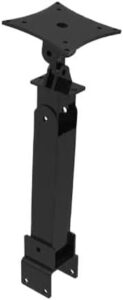
Upgrade your sim racing setup with our premium modular button box mount—compatible with CSP, SVR, Fanatec, Moza, and more. Ideal for PC, Xbox, and PS users, it features an adjustable height monitor stand for perfect positioning and comfort. Built from high-carbon steel, it offers unmatched durability and stability during long gaming sessions. Easy to install and designed to fit most button boxes, this mount ensures a pro-level, immersive experience. Enhance your control, reduce strain, and race with confidence.
Best For: Budget-conscious racers who want the look and rigidity of a high-end aluminum profile rig but at a lower price point, and who don’t need infinite adjustability.
Note: “CS-Pro” and “SV-R” typically refer to the modular cockpits sold by brands like AZRacing or various import retailers (AliExpress/Ubuy). They are often marketed as “Modular Direct Drive Rigs.”
Key Features
- “Faux-Profile” Steel Construction: Unlike standard Sim-Lab or ASR rigs that use aluminum extrusion (8020), these rigs often use 120mm x 60mm High-Carbon Steel tubes. They look like heavy-duty aluminum rigs but are magnetic and welded/bolted differently.
- Pre-Machined Modularity: Instead of “infinite” sliding slots (T-slots) found on aluminum rigs, these usually rely on pre-drilled holes and slots for adjustment.
- Hybrid Layouts: The SV-R model is typically focused on a Formula/F1 seating position (reclined), while the CS-Pro is often a GT or Hybrid style.
- Direct Drive Ready: The heavy steel frame is extremely rigid, claiming support for wheelbases up to 30Nm+ (Simucube, Fanatec DD2) without flex.
- All-in-One Packages: Unlike big brands that sell the seat separately, these are frequently sold as “Bundles” that include the frame, a bucket seat, and sometimes monitor mounts.
Pros
- Cost-to-Rigidity Ratio: You get a chassis that is physically heavier and stiffer than entry-level rigs (like the playseat Evolution) for a fraction of the price of a branded ASR/Sim-Lab rig.
- Aesthetics: The chunky black steel tubes give the “Pro Sim” look. They look expensive and professional in a gaming room.
- Zero Flex: Because they use thick steel tubes (often 2mm+ wall thickness), there is virtually no flex, even under heavy braking with load cell pedals.
- Included Seat: The value proposition is high because they often include a fiberglass bucket seat, which can cost $300-$500 alone from other brands.
Cons
- NOT Standard 8020 Aluminum: This is the biggest drawback. Because they are steel with pre-drilled holes, you cannot easily mount standard sim racing accessories (cup holders, shifters, button boxes) made for standard aluminum extrusion. You are limited to the holes the manufacturer drilled.
- Limited Adjustability: You cannot slide your seat or pedals “1 millimeter” forward. You have to move to the next bolt hole. If the holes don’t align with your body size, you might be uncomfortable.
- Shipping & Support Risks: These are often sold by overseas distributors (via AliExpress, Ubuy, or drop-shippers). If a part arrives bent or missing, customer support can be difficult compared to a domestic company like Advanced Sim Racing or Trak Racer.
Buying Guide
Compatibility
-
Wheelbase mounting: Confirm you can mount your specific wheelbase type (top mount, front mount, side mount). ASR offers different mounting approaches across builds and accessory options (varies by model and wheel deck).
-
Pedals: If you’re using load-cell or stiffer pedal sets, prioritize frames designed for “zero flex” behavior (ASR 3/4/6 are positioned for this).
Build Quality
-
Look for: thick profile base, reinforced steering uprights, solid pedal mounting. ASR highlights these features clearly on the ASR 4 and ASR 6 pages.
Adjustability
-
If you switch between GT and formula positions, or multiple drivers use the same rig, prioritize the higher models (especially ASR 6’s “widest range”).
Space Requirements
-
Measure: footprint + seat travel + monitor distance.
-
If you’re on a compact desk/room layout, the ASR 3/4 class is often easier to place than wider, heavier “everything-in-one” builds.
Features
-
Expansion points matter: shifter arm, handbrake, keyboard tray, monitor mounts, cable management. Reviewers often frame cockpit decisions around adjustability + adaptability + rigidity.
Budget
A simple way to think about it:
- ASR 1 = entry value (good step up from wheel stands) with a 1.5″ base.
- ASR 3 = best value “serious rig” tier.
- ASR 4 = best all-around long-term buy for many DD + load-cell users.
- ASR 6 = maximum stability + adjustment headroom.
Customer Reviews and Warranty
- Use reviews to validate: ease of assembly, real-world rigidity, adjustability, and any long-term quirks (like fit/finish items).
- Also factor shipping and regional availability—reviewers note this can outweigh small differences between aluminum-profile cockpits.
Final Recommendation
- If you want one chassis that most people won’t “outgrow,” choose ASR 4 for the best overall balance of rigidity and practicality.
- If your setup is primarily single monitor or VR and you want strong value, go ASR 3.
- If you want maximum stability, maximum adjustment range, and the most upgrade headroom, pick ASR 6 (Legacy Edition).

My name is David Miller, and I’m a sim racing enthusiast with a passion for realistic driving and smart, affordable setups. I started sim racing years ago with basic gear and a single monitor, and slowly upgraded to better wheels, pedals, and rigs as I learned more about car control, racecraft, and setup tuning.